Irritable Bowel Syndrome
Join our mailing list - go to the form hereThis page will give you information about some of the symptoms and methods of managing Irritable Bowel Syndrome (IBS)
Typical Symptoms
The symptoms and severity of IBS can be greatly varied.
Typical symptoms could include:
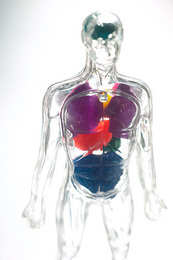 Pain - usually
in the lower abdomen which can sometimes be severe and crippling and can take
from seconds to days to pass.
Pain - usually
in the lower abdomen which can sometimes be severe and crippling and can take
from seconds to days to pass.
Bloating - a feeling of excess wind with the abdomen (lower stomach) swollen.
Diarrhoea and Constipation - some sufferers can experience one or the other and some experience a swing between the two. In severe cases the diarrhoea can be so bad and immediate that sufferers become housebound for fear of being caught short without access to a toilet. Other people have difficulty passing stools and have to strain in order to relieve themselves. Some feel as though they have not completely emptied their bowels.
Other Symptoms - less common symptoms can include feelings of nausea, headaches, belching and excess gas in the stomach, poor appetite and a related 'irritable bladder'. This list is not exhaustive.
If you suspect you have IBS, you should first consult your doctor for diagnosis.
What Causes IBS?
12 million people in the UK suffer from IBS - that's 1 in 5 of the population and although it is more common in women, men suffer too.
The symptoms associated with IBS are typically caused by a spasm in the intestine. The intestine uses squeezing movements to pass food along. It is these squeezing movements that become abnormal and produce spasm which causes the pain and the abnormal functions of the bowel.
IBS itself also seems to come in spasms and sufferers can have periods completely free of the sypmtoms or with milder symptoms.
It is not yet fully understood what causes the spasms and they can often be attributed to more than one cause.
There can be sensitivity of the intestines to certain foods and this can stimulate an abnormal response.
IBS can also be related to stress. Many sufferers, if they take note, can link the condition to times of increased stress.
For women it can also be linked to their menstrual cycle.
What Can I do?
Always consult your doctor for diagnosis as symptoms of IBS can be similar to symptoms of other conditions which should be eliminated first.
At our centre we offer a complete package for the IBS sufferer and will recommend the approaches that are going to be most beneficial to you.
Typically, a nutritional consultation would assess any aspects of your diet and eating patterns that may be contributing to the IBS and also whether allergy testing was indicated. Once these potential causes were eliminated or redressed we would then look at your stress levels and establish stress management techniques if indicated.
Finally you would learn self-awareness, visualisation and relaxation techniques incorporating self-hypnosis with the aim of teaching you to take control and manage your own symptoms.
Finally a programme of exercise and relaxation would be recommended.
Hypnotherapy and nutritional therapy are now well-accepted as some fo the most successful ways fo treating IBS and there is an NHS clinic at Wythenshawe hospital dedicated to hypnotherapy for the treatment of IBS.
 Hypnosis could ease symptoms |
Doctors should consider using this and other "psychological" treatments such as antidepressants to help sufferers, King's College London experts say in the British Medical Journal.
However, a shortage of therapists could hinder this, they add.
Experts said there was growing evidence that IBS cases have psychological as well as biological elements.
Other therapies
IBS is a common and painful medical condition that has a wide range of symptoms, including regular abdominal pain, diarrhoea and constipation.
Conventional medicines prescribed for IBS often ease symptoms partially, or not at all.

 Using a psychological treatment does not mean that the disease is 'all in the mind'
Many scientists now believe that the cause in many cases is a combination of mental and physical factors, and that the drugs commonly used to tackle it may be aiming at the wrong target.
Patients with IBS are more likely to be diagnosed with depression.
Dr Ian Forgacs, a consultant gastroenterologist from Kings College, says that doctors are often reluctant to prescribe anti-depressants, especially in patients who, apart from their IBS, show no outward signs of being depressed.
He urged them to consider other forms of psychological therapy, including hypnotherapy, as an alternative in some cases.
"Patients with irritable bowel syndrome should be made aware of the existence of these treatments so that they can make informed choices," he said.
"Specifically, they should be made aware that using a psychological treatment does not mean that the disease is 'all in the mind'."
He found that one of the most effective treatments for IBS in research studies were so-called "talking therapies", such as cognitive behavioural therapy, particularly for people whose symptoms were causing them the most distress.
And severe cases of IBS could be improved by using hypnotherapy to target the links between the brain and the gut.
Hypnosis sessions concentrated on encouraging relaxation, then visualising the gut as a fast flowing river which is then imagined to be flowing more slowly and smoothly.
Skill shortage
Dr Forgacs said that one obstacle to providing psychological therapies was a lack of the right specialists in some areas.
"Irritable bowel syndrome is undeniably very common, and many patients are probably denied help by lack of access to therapists with the appropriate psychological skills," he said.
Dr Nick Read, a psychologist and adviser to the IBS Network, said he felt that the majority of IBS patients had a psychologists element to their condition.
He said: "There's now a lot of evidence that psychological therapies can be effective, but a lot of doctors remain sceptical, and carry on treating with drugs which have side-effects, and which basically don't work.
"I work with patients with IBS trying to understand what, for each patient, lies behind the illness."